

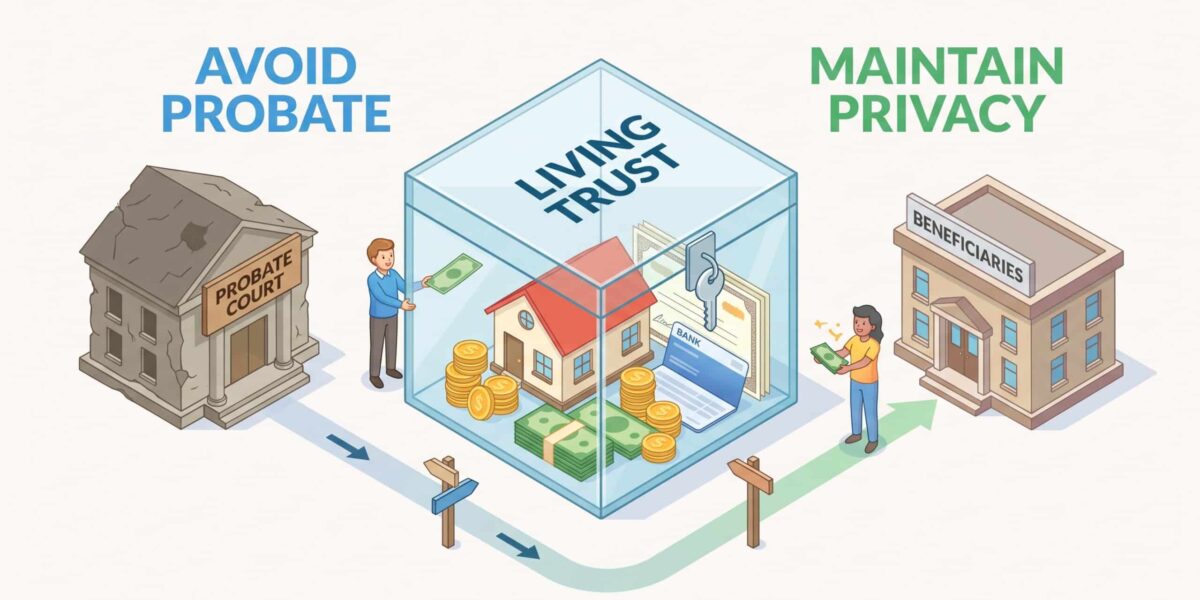
A living trust is a legal arrangement you create while you’re alive to hold and manage your assets, with instructions for what happens to them if you become incapacitated or after you die. The core idea: you transfer ownership of your assets into the trust, but you still control them — and when you pass away, those assets can be distributed without going through probate, which saves time, money, and public exposure.
What a Living Trust Actually Does
- Holds your assets (home, bank accounts, investments, etc.) under a legal entity you control.
- Names a trustee (usually you) to manage those assets.
- Names a successor trustee who steps in if you’re incapacitated or after your death.
- Specifies beneficiaries and exactly how/when they receive assets.
Revocable vs. Irrevocable Living Trusts
- Revocable Living Trust (most common)
- You can change it, add/remove assets, or cancel it.
- You keep full control while alive.
- Becomes irrevocable when you die.
- Does not provide tax shelter while you’re alive.
- Main benefit: avoids probate and keeps your estate private.
- Irrevocable Living Trust
- You give up control once assets are transferred.
- Can reduce estate taxes and offer stronger asset protection.
Why People Use Living Trusts
- Avoid probate — faster, cheaper, and private.
- Plan for incapacity — successor trustee can manage finances without court involvement.
- Protect beneficiaries — especially minors, special‑needs individuals, or financially inexperienced heirs.
- Maintain privacy — unlike wills, trusts are not public record.